In the PMBOK® Guide, a " traditional " project—often referred to as a Predictive or Waterfall lifecycle—is characterized by a high degree of certainty and a sequential flow of phases. These projects rely heavily on the ability to define the scope clearly at the beginning and follow a disciplined plan.
Why Choice B is correct (Few expected simple scope change requests): In a linear approach, the goal is to " lock down " the scope during the planning phase. Because the requirements are well-understood and the environment is stable, there should be very few changes once execution begins. Frequent changes are usually a sign that an adaptive (Agile) approach would have been more appropriate.
Why Choice C is correct (Routine and repetitive activities): Traditional delivery excels in projects where the work is well-known and follows a predictable pattern (e.g., construction or standard manufacturing). Because the activities are routine, the project manager can estimate time and cost with high accuracy based on historical data.
Why Choice E is correct (Use of established templates): Linear projects rely on high-level standardization. To ensure consistency and governance across the phases (Initiating, Planning, Executing, Monitoring/Controlling, and Closing), the project manager utilizes Organizational Process Assets (OPAs), such as standardized templates for project charters, risk registers, and status reports.
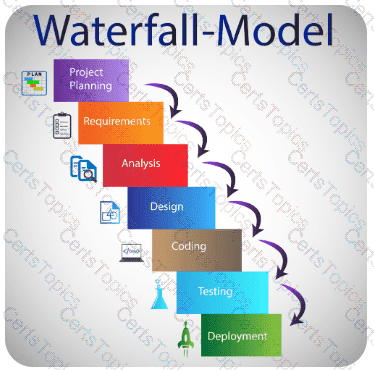
Analysis of other options:
A (Many expected simple scope change requests): This describes an Adaptive (Agile) environment. In Agile, change is welcomed throughout the process because the scope is expected to evolve as the customer sees incremental deliveries.
D (Collocated project teams): While collocation is a " best practice " for team communication, it is not a defining characteristic of the delivery approach itself. Both Waterfall and Agile teams can be collocated or virtual; however, Agile frameworks (like Scrum) emphasize collocation more strongly than traditional linear models do.
Key Concept: The Project Management Institute (PMI) teaches that a Linear Delivery Approach is most successful when the technical risk is low and the requirements are stable. By leveraging established templates (Choice E) and focusing on routine work (Choice C) with minimal changes (Choice B), the project manager can maximize efficiency and ensure the project is delivered on time and within the original budget.