You have an Azure subscription that contains 10 virtual machines, a key vault named Vault 1, and a network security group (NSG) named NSG1. All the resources are deployed to the East US Azure region.
The virtual machines are protected by using NSG1. NSG1 is configured to block all outbound traffic to the internet.
You need to ensure that the virtual machines can access Vault1. The solution must use the principle of least privilege and minimize administrative effort.
What should you configure as the destination of the outbound security rule for NSG1?
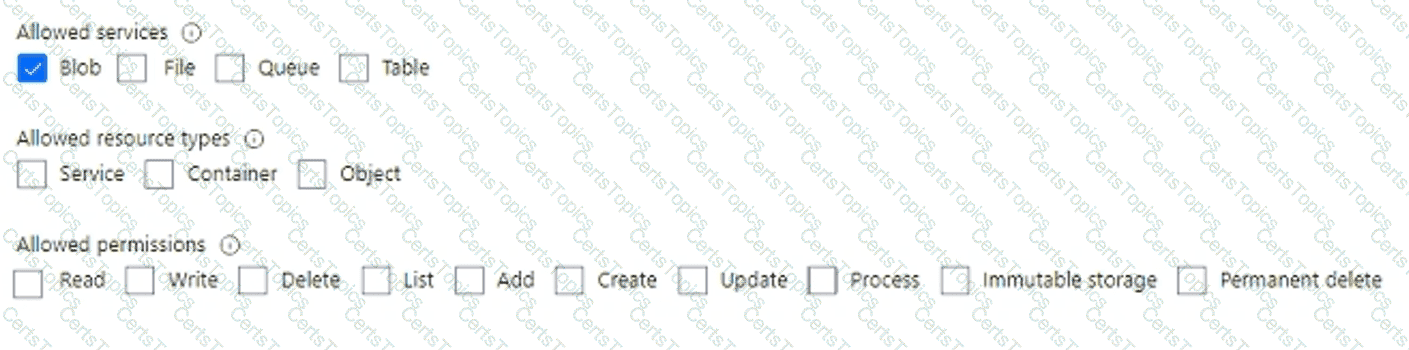
You need to generate a shared access signature (SAS). The solution must meet the following requirements:
• Ensure that the SAS can only be used to enumerate and download blobs stored in container1.
• Use the principle of least privilege,
Which three settings should you enable? To answer, select the appropriate settings in the answer area.
NOTE: Each correct selection is worth one point.
You have an Azure subscription that contains the resources shown in the following table.
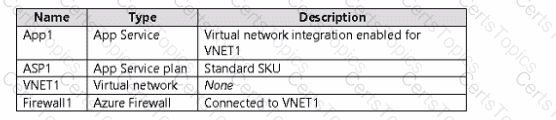
You need to manage outbound traffic from VNET1 by using Firewall1.
What should you do first?
You have an Azure virtual machine named VM1.
Azure collects events from VM1.
You are creating an alert rule in Azure Monitor to notify an administrator when an error is logged in the System event log of VM1.
You need to specify which resource type to monitor.
What should you specify?
You have an Azure subscription that contains a storage account named storage1.
You plan to use conditions when assigning role-based access control (RABC) roles to storage1
Which storage1 services support conditions when assigning roles?
You have a virtual network named VNETI that contains the subnets shown in the following table.

You have Azure virtual machines that have the network configurations shown in the following table.

For NSG2, you create the inbound security rule shown in the following table.

For NSG2, you create the inbound security rule shown in the following table.

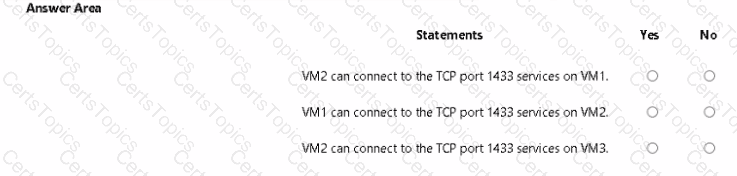
For each of the following statements, select Yes If the statement is true. Otherwise, select No. NOTE Each correct selection is worth one point
You have an Azure subscription that contains the hierarchy shown in the following exhibit.
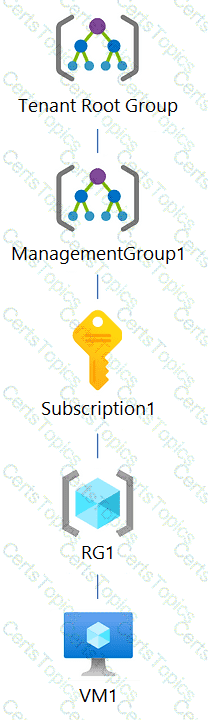
You create an Azure Policy definition named Policy1.
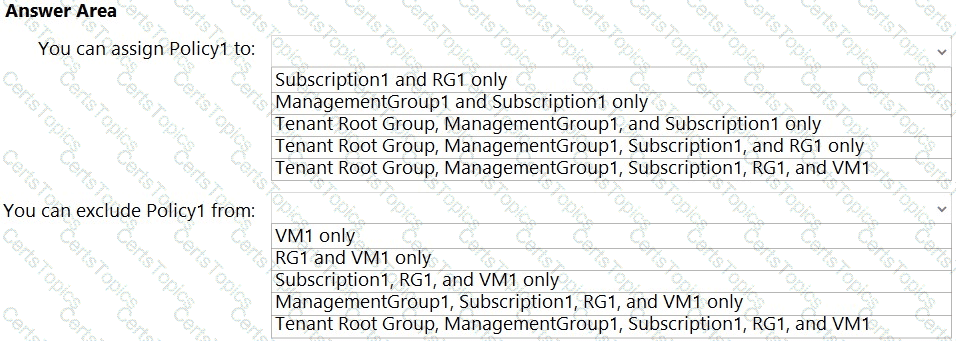
To which Azure resources can you assign Policy and which Azure resources can you specify as exclusions from Policy1? To answer, select the appropriate options in the answer
NOTE Each correct selection is worth one point.
You have the Azure virtual machines shown in the following table.
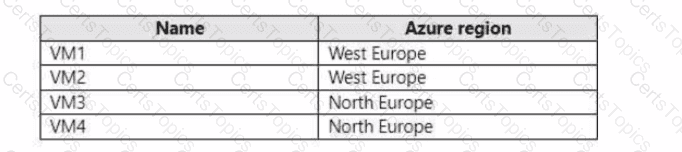
You have a Recovery Services vault that protects VM1 and VM2.
You need to protect VM3 and VM4 by using Recovery Services.
What should you do first?
You have an Azure subscription that contains the public load balancers shown in the following table.
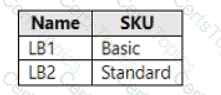
You plan to create six virtual machines and to load balance requests to the virtual machines. Each load balancer will load balance three virtual machines.
You need to create the virtual machines for the planned solution.
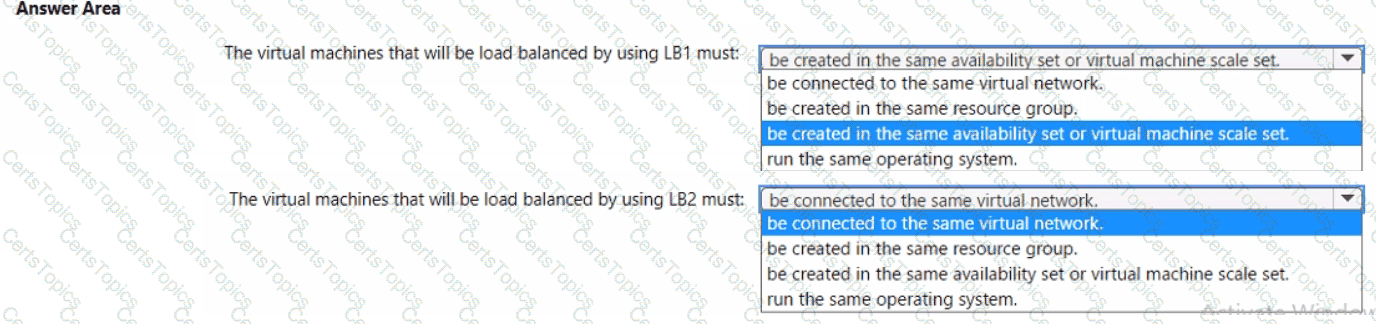
How should you create the virtual machines? To answer, select the appropriate options in the answer area.
NOTE: Each correct selection is worth one point.
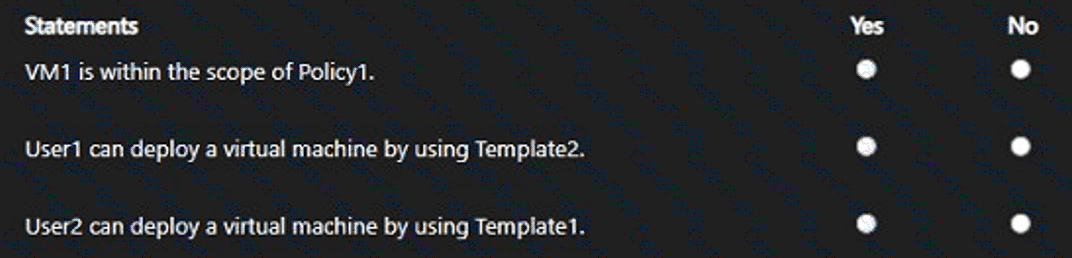
You have an Azure subscription named Sub1 that contains two users named User1 and User2 and the resources shown in the following table.
Name
Type
Resource group
RG1
Resource group
Not applicable
RG2
Resource group
Not applicable
VM1
Virtual machine
RG2
VNet1
Virtual network
RG1
VNet2
Virtual network
RG2
User1 is assigned the Owner role for Sub1. User2 is assigned the Contributor role for RG1.
You have two Azure Resource Manager (ARM) templates that are used to deploy virtual machines. The templates have the following configurations:
Name: Template1
CPU: 8-core
RAM: 64 GB
Disk type: Managed
Connected to: VNet2
Resource group: RG1
Name: Template2
CPU: 16-core
RAM: 192 GB
Disk type: Premium
Connected to: VNet1
Resource group: RG1
You create an Azure policy named Policy1. Policy1 is used to manage the deployment of virtual machines that have more than 128 GB of RAM. Policy1 has the following configurations:
Assignment scope: RG1
Exclusion scope: None
Effect: Deny
For each of the following statements, select Yes if the statement is true. Otherwise, select No.
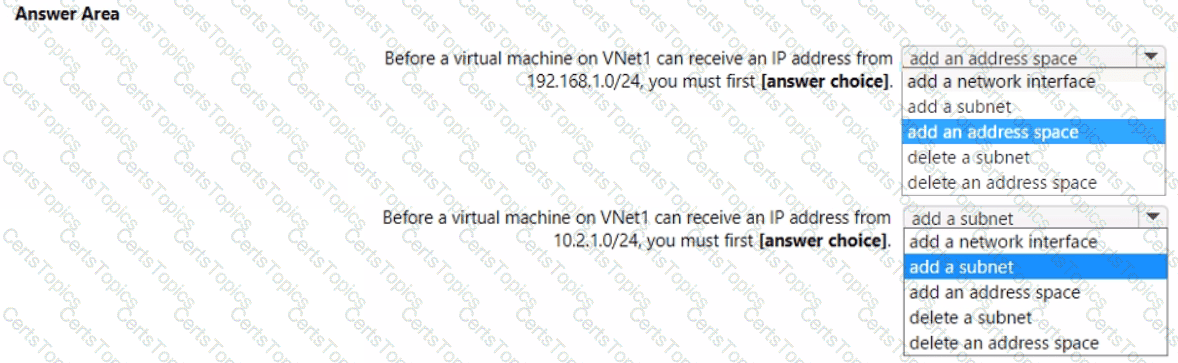
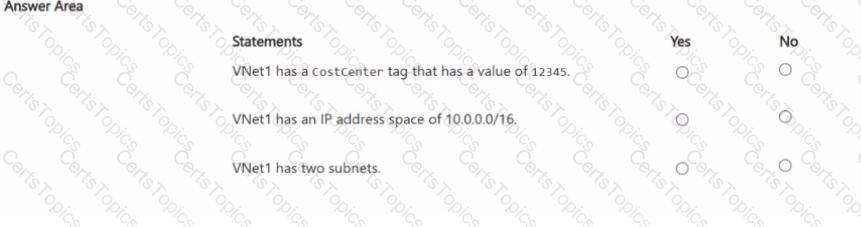
You have a virtual network named VNet1 that has the configuration shown in the following exhibit.
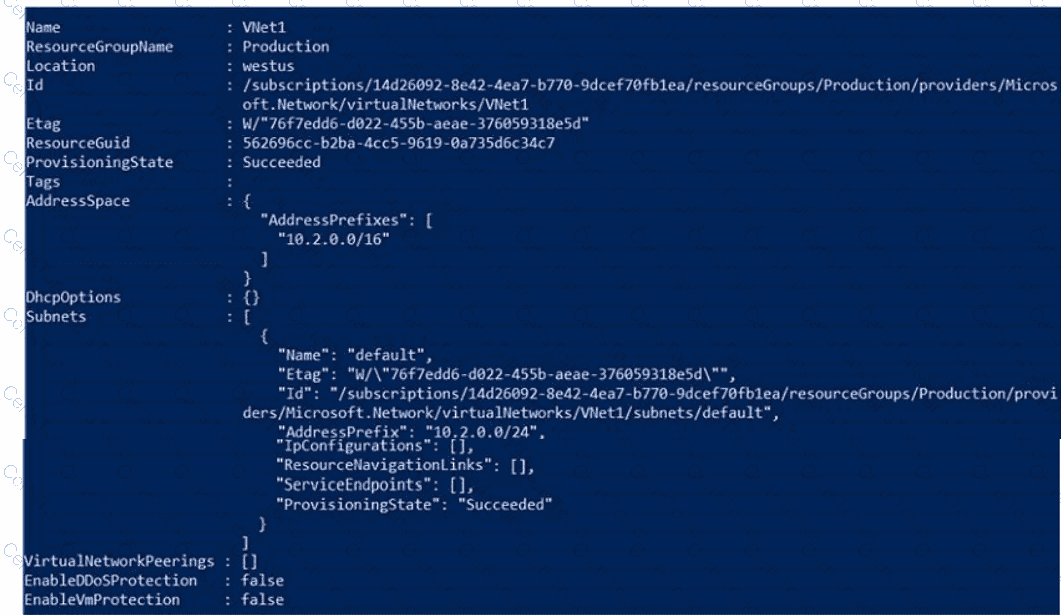
Use the drop-down menus to select the answer choice that completes each statement based on the information presented in the graphic.
NOTE: Each correct selection is worth one point.
Note: This question is part of a series of questions that present the same scenario. Each question in the series contains a unique solution that might meet the stated goals. Some question sets might have more than one correct solution, while others might not have a correct solution.
After you answer a question in this section, you will NOT be able to return to it. As a result, these questions will not appear in the review screen.
You have an Azure subscription that contains the virtual machines shown in the following table.
You deploy a load balancer that has the following configurations:
•Name: LB1
•Type: Internal
•SKU: Standard
•Virtual network: VNET1
You need to ensure that you can add VM1 and VM2 to the backend pool of LB1.
Solution: You create two Standard public IP addresses and associate a Standard SKU public IP address to the network interface of each virtual machine.
Does this meet the goal?
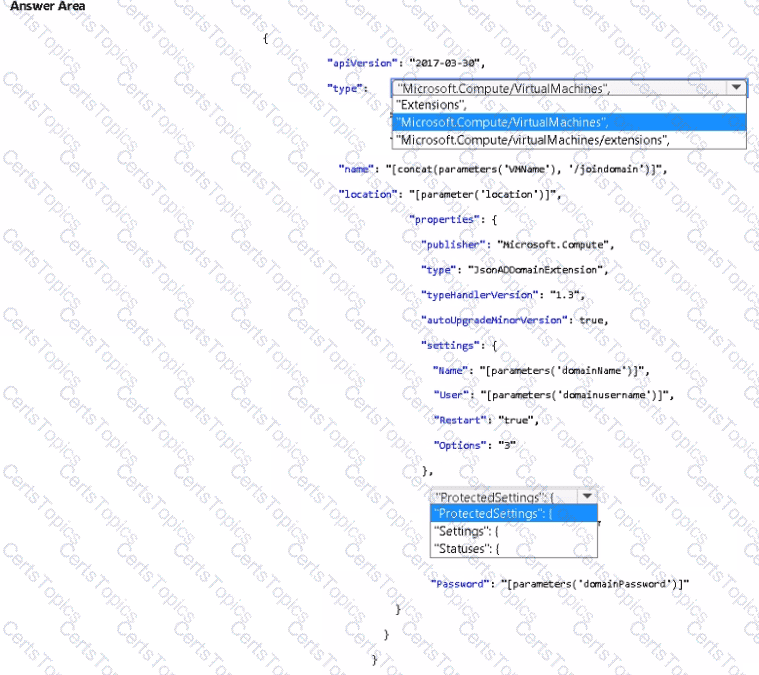
You have an Azure subscription. The subscription contains a virtual machine that runs Windows 10.
You need to join the virtual machine to an Active Directory domain.
How should you complete the Azure Resource Manager (ARM) template? To answer, select the appropriate options in the answer area.
NOTE Each correct selection is worth one point.
You have an Azure Kubernetes Service (AKS) cluster named AKS1.
You need to configure cluster autoscaler for AKS1.
Which two tools should you use? Each correct answer presents a complete solution,
NOTE: Each correct selection is worth one point
You have an Azure subscription. The subscription contains virtual machines that connect to a virtual network named VNet1.
You plan to configure Azure Monitor for VM Insights.
You need to ensure that all the virtual machines only communicate with Azure Monitor through VNet1.
What should you create first?
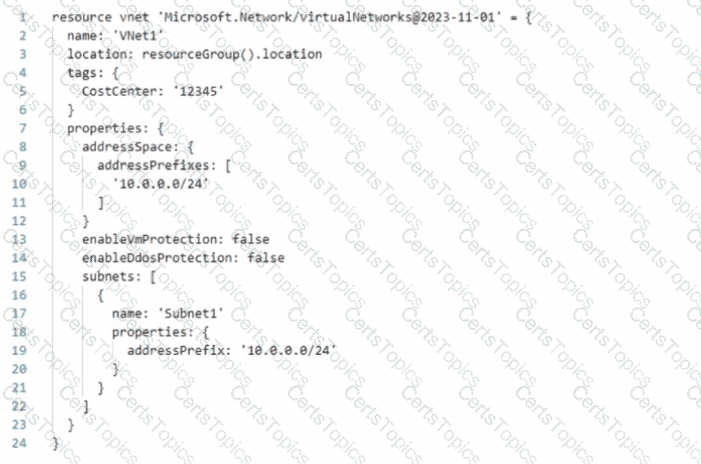
You have an Azure subscription that contains a resource group named RG1.
You have a file named File1.bicep as shown in the File1.bicep exhibit. (Click the File1.bicep tab.)
You create a file named File2.bicep as shown in the File2.bicep exhibit. (Click the File2.bicep tab.)
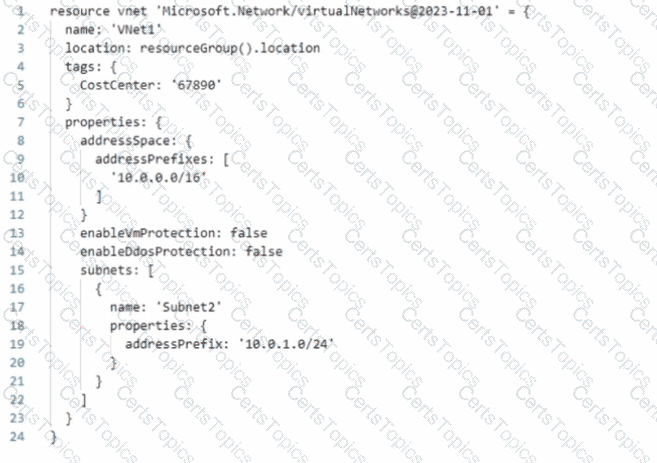
You run the following PowerShell commands.
New-AzResourceGroupDeploynent -ResourceOroupHame RGi -TeaplateFile Filel.bicep
New-AzResourceGroupDeploynent -Whatif -ResourceGroupNaae RG1 -TemplateFile File2.bicep
For each of the following statements, select Yes if the statement is true. Otherwise, select No.
NOTE: Each correct selection is worth one point.
You have an Azure subscription that contains two Log Analytics workspaces named Workspace 1 and Workspace? and 100 virtual machines that run Windows Server.
You need to collect performance data and events from the virtual machines. The solution must meet the following requirements:
• Logs must be sent to Workspace! and Workspace?
• All Windows events must be captured
• All security events must be captured.
What should you install and configure on each virtual machine?
You have an Azure subscription that contains a virtual network named VNET1. VNET1 contains the subnets shown in the following table.
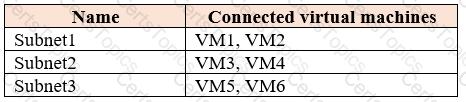
Each virtual machine uses a static IP address.
You need to create network security groups (NSGs) to meet following requirements:
Allow web requests from the internet to VM3, VM4, VM5, and VM6.
Allow all connections between VM1 and VM2.
Allow Remote Desktop connections to VM1.
Prevent all other network traffic to VNET1.
What is the minimum number of NSGs you should create?
You plan to deploy several Azure virtual machines that will run Windows Server 2022 in a virtual machine scale set by using an Azure Resource Manager template.
You need to ensure that NGINX is available on all the virtual machines after they are deployed.
What should you use?
You have an Azure subscription that has the Azure container registries shown in the following table.
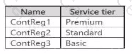
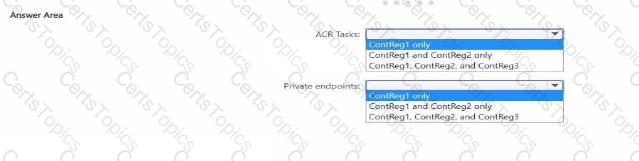
You plan to use ACR Tasks and configure endpoint connections.
You have Azure virtual machines that run Windows Server 2019 and are configured as shown in the following table.

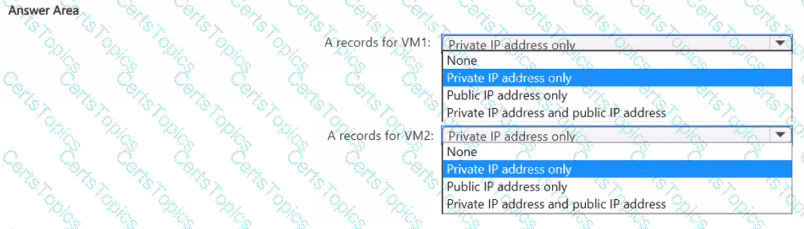
You create a private Azure DNS zone named adatum.com. You configure the adatum.com zone to allow auto registration from VNET1.
Which A records will be added to the adatum.com zone for each virtual machine? To answer, select the appropriate options in the answer area.
NOTE: Each correct selection is worth one point.
You have an Azure subscription. You plan to deploy the resources shown in the following table.
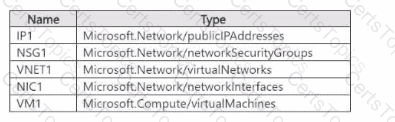
You need to create a single Azure Resource Manager (ARM) template that will be used to deploy the resources. Which resource should be added to the dependsOn section for VM1?
You have an Azure subscription that contains the virtual machines shown in the following table.
javascript:void(0)

You deploy a load balancer that has the following configurations:
• Name: LB1
• Type internal
• SKU: Standard
• Virtual network VNET1
You need to ensure that you can add VM1 and VM2 to the backend pool of LB1.
Solution: You create a Basic SKU public IP address, associate the address to the network interface of VM1, and then start VM1.
Does this meet the goal?
You implement the planned changes for NSG1 and NSG2.
For each of the following statements, select Yes if the statement is true. Otherwise, select No.
NOTE: Each correct selection is worth one point.
You discover that VM3 does NOT meet the technical requirements.
You need to verify whether the issue relates to the NSGs.
What should you use?
You need to ensure that VM1 can communicate with VM4. The solution must minimize administrative effort.
What should you do?
You need to meet the technical requirement for VM4.
What should you create and configure?
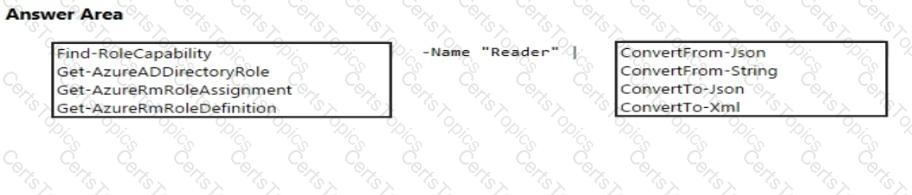
You need to implement Role1.
Which command should you run before you create Role1? To answer, select the appropriate options in the answer area.
NOTE: Each correct selection is worth one point.
You need to recommend a solution to automate the configuration for the finance department users. The solution must meet the technical requirements.
What should you include in the recommended?
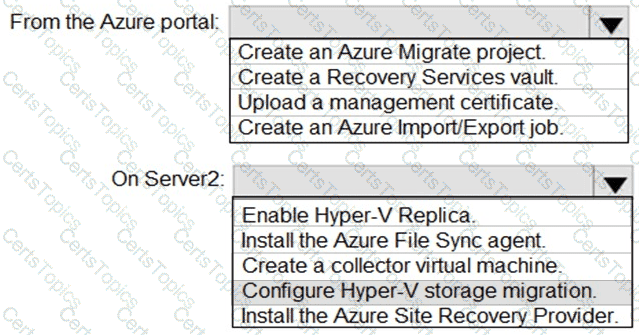
You need to the appropriate sizes for the Azure virtual for Server2.
What should you do? To answer, select the appropriate options in the answer area.
NOTE: Each correct selection is worth one point.
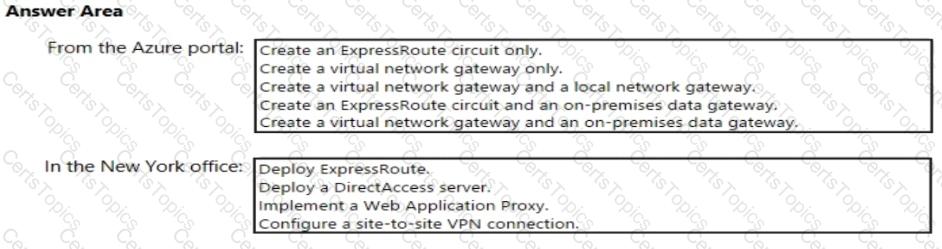
You need to meet the connection requirements for the New York office.
What should you do? To answer, select the appropriate options in the answer area.
NOTE: Each correct selection is worth one point.
You need to define a custom domain name for Azure AD to support the planned infrastructure.
Which domain name should you use?
Which blade should you instruct the finance department auditors to use?
You need to resolve the licensing issue before you attempt to assign the license again.
What should you do?
You need to prepare the environment to meet the authentication requirements.
Which two actions should you perform? Each correct answer presents part of the solution.
NOTE: Each correct selection is worth one point.
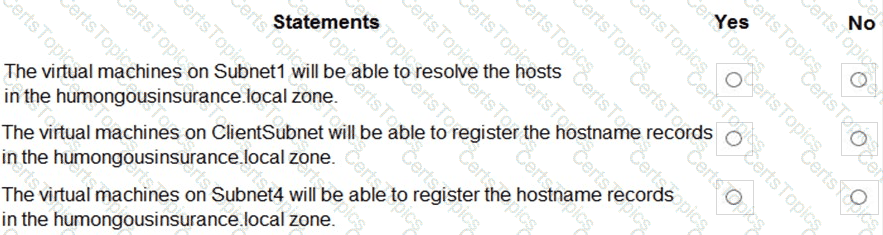
You are evaluating the name resolution for the virtual machines after the planned implementation of the Azure networking infrastructure.
For each of the following statements, select Yes if the statement is true. Otherwise, select No.
You need to resolve the Active Directory issue.
What should you do?
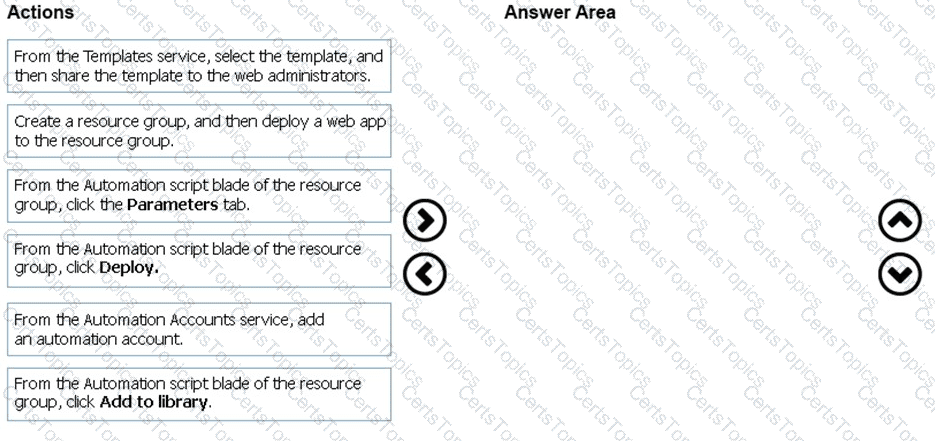
You need to prepare the environment to ensure that the web administrators can deploy the web apps as quickly as possible.
Which three actions should you perform in sequence? To answer, move the appropriate actions from the list of actions to the answer area and arrange them in the correct order.
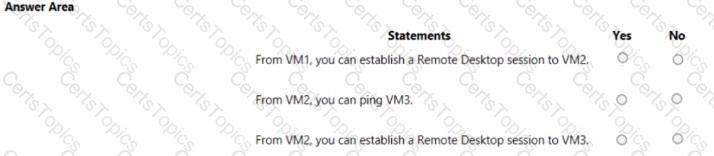
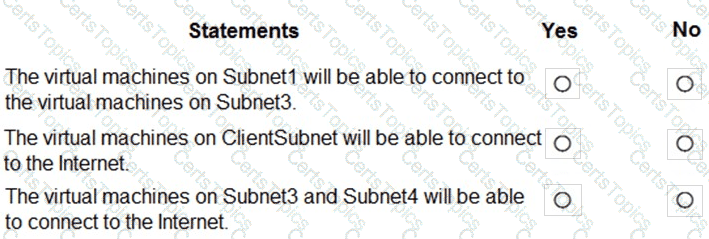
You are evaluating the connectivity between the virtual machines after the planned implementation of the Azure networking infrastructure.
For each of the following statements, select Yes if the statement is true. Otherwise, select No.
You need to prepare the environment to meet the authentication requirements.
Which two actions should you perform? Each correct answer presents part of the solution.
NOTE Each correct selection is worth one point.
You need to define a custom domain name for Azure AD to support the planned infrastructure.
Which domain name should you use?
Which blade should you instruct the finance department auditors to use?
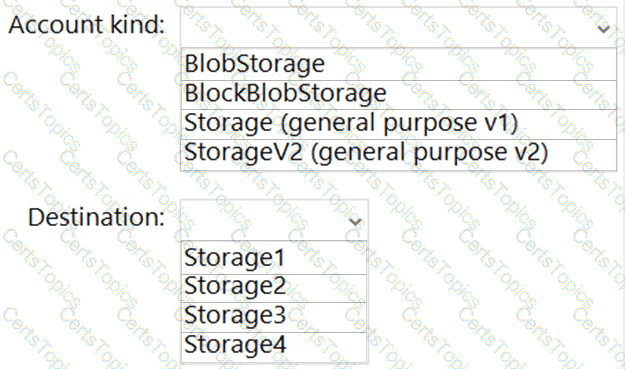
You need to create storage5. The solution must support the planned changes.
Which type of storage account should you use, and which account should you configure as the destination storage account? To answer, select the appropriate options in the answer area.
NOTE: Each correct selection is worth one point.
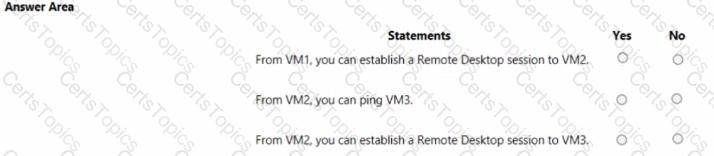
You implement the planned changes for NSG1 and NSG2.
For each of the following statements, select Yes if the statement is true. Otherwise, select No.
NOTE: Each correct selection is worth one point.
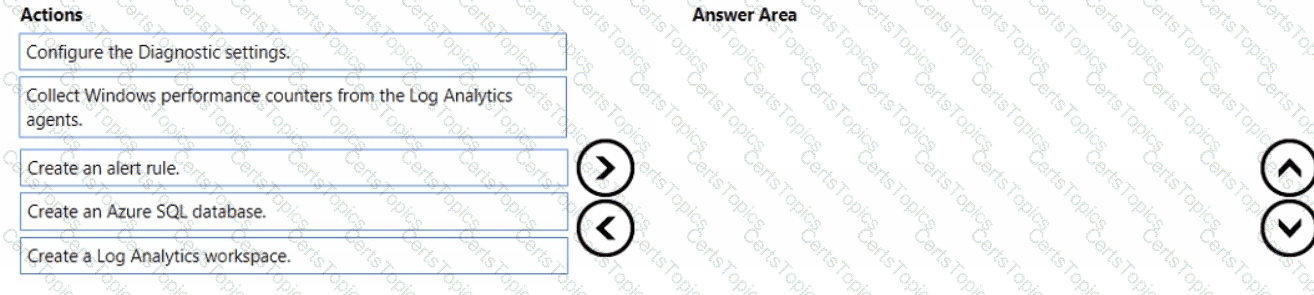
You need to configure the alerts for VM1 and VM2 to meet the technical requirements.
Which three actions should you perform in sequence? To answer, move all actions from the list of actions to the answer area and arrange them in the correct order.
You need to identify which storage account to use for the flow logging of IP traffic from VM5. The solution must meet the retention requirements.
Which storage account should you identify?
You need to meet the user requirement for Admin1.
What should you do?
You need to implement a backup solution for App1 after the application is moved.
What should you create first?
You need to recommend a solution for App1. The solution must meet the technical requirements. What should you include in the recommendation? To answer, select the appropriate options in the answer area.
NOTE: Each correct selection is worth one point.
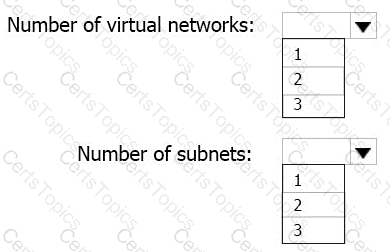
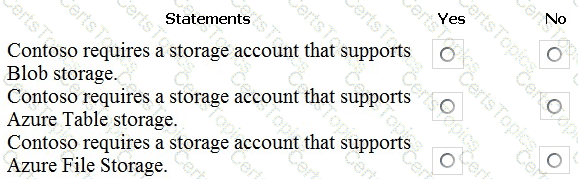
You need to identify the storage requirements for Contoso.
For each of the following statements, select Yes if the statement is true. Otherwise, select No.
NOTE: Each correct selection is worth one point.
You need to recommend an identify solution that meets the technical requirements.
What should you recommend?
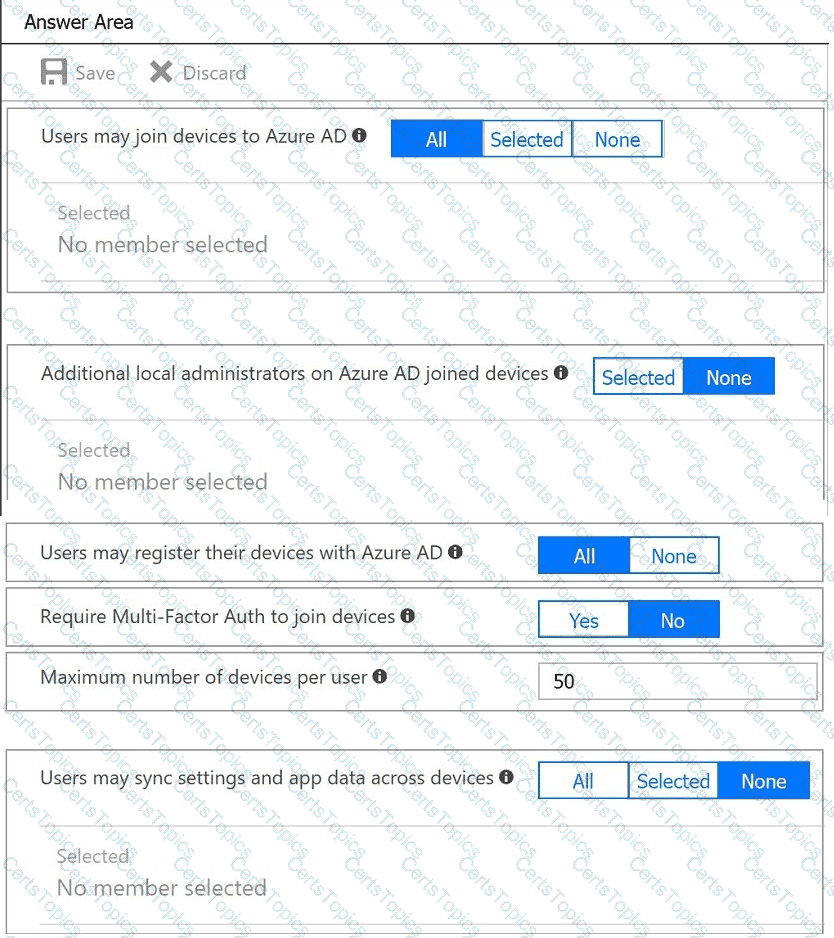
You need to configure the Device settings to meet the technical requirements and the user requirements.
Which two settings should you modify? To answer, select the appropriate settings in the answer area.
You need to move the blueprint files to Azure.
What should you do?
You are planning the move of App1 to Azure.
You create a network security group (NSG).
You need to recommend a solution to provide users with access to App1.
What should you recommend?
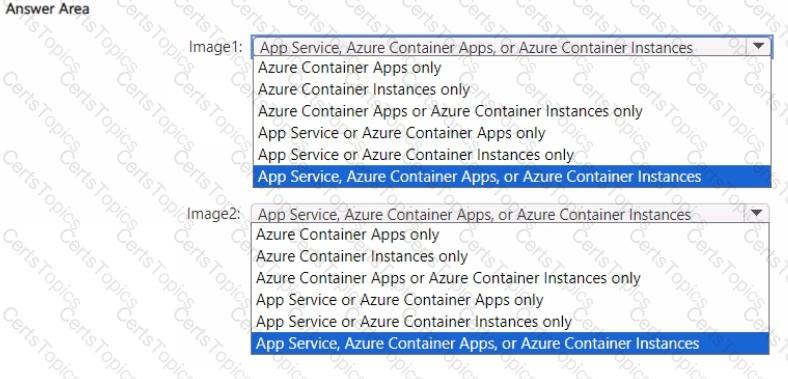
You need to implement the planned changes for the new containers.
Which Azure services can you use for each image? To answer, select the appropriate options in the answer area.
NOTE: Each correct selection is worth one point.
You need to configure encryption for the virtual machines. The solution must meet the technical requirements.
Which virtual machines can you encrypt?
You need to implement the planned changes for the storage account content. Which containers and file shares can you use to organize the content?
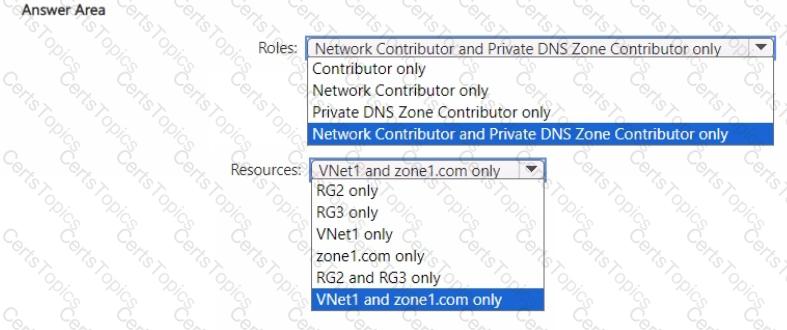
You need to implement the planned changes for User1.
Which roles should you assign to User1, and for which resources? To answer, select the appropriate options in the answer area.
NOTE: Each correct selection is worth one point.
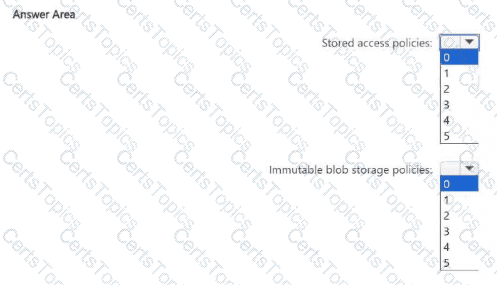
You implement the planned changes for cont2.
What is the maximum number of additional access policies you can create for cont2? To answer, select the appropriate options in the answer area.
NOTE: Each correct selection is worth one point.
You implement the planned changes for Scope1.
You need to ensure that Scope1 meets the technical requirements.
What can you encrypt by using Scope1?
You need to configure WebApp1 to meet the technical requirements.
Which certificate can you use from Vault1?
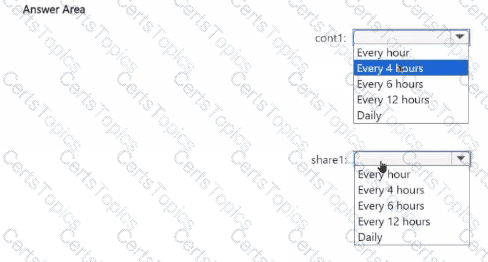
You need to configure Azure Backup to meet the technical requirements for cont1 and share1.
To what should you set the backup frequency for each resource? To answer, select the appropriate options in the answer area.
NOTE: Each correct selection is worth one point.
You need to implement the planned changes for DCR1. Which type of query should you use?
Copyright © 2021-2026 CertsTopics. All Rights Reserved